|
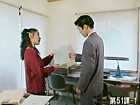
J is F's secretary, and uses polite language toward her boss (F). The dialog here has F asking J to make photocopies of certain documents which F needs for the 4 o'clock meeting.
|
|
While both hookokusho and repooto mean "report", the former sounds slightly more official than the latter. Hookokusho is a loanword from Chinese, and generally speaking, Chinese words tend to be more official and formal.
|
|
For the act of making photocopies, you have the following three Verbal choices:
|
|
kopii-suru
|
to photocopy [compound Verbal]
|
|
kopii (o) suru
|
to make (a) photocopy/ies
|
|
kopii (o) toru
|
to take (a) photocopy/ies
|
|
|
The Verbal toru was first introduced in Lesson 40 in the context of apointo o toru, i.e. "to make an appointment". As shown in the Vocabulary in that Lesson, toru may be translated into such English verbs as "take", "make", "get", "steal", etc. In this Lesson it is used to "take (a photocopy)". In fact toru, which largely corresponds to "take" in English, may be used in such instances as below:
|
|
塩を取ってください。
|
Shio o totte kudasai.
|
Pass me the salt, please. [as at the dinner table]
|
|
写真を撮りましょう。
|
Shashin o torimashoo.
|
Let's take a picture.
|
|
この花はあそこで採りました。
|
Kono hana wa asoko de torimashita.
|
I picked this flower over there.
|
|
|
Notice that different kanji are employed for toru depending on the context in which the Verbal is used.
|
|
Although kashikomarimashita was originally the distal-style perfective form of the Verbal kashikomaru, this Verbal is seldom used, except for in some limited usages including the expression kashikomarimashita, which is a very formal way of expressing acknowledgment of an order or instruction.
|